Shirebrook WMC, Sheffield
Application to demolish working men’s club of Full Monty Fame:
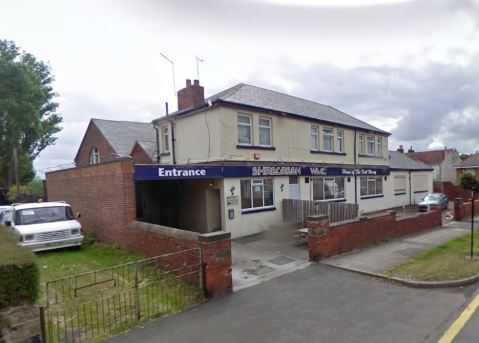
Not the most beautiful of buildings, but an important cultural icon, having featured in Yorkshire’s second greatest film (yes, Kes wins), Shiregreen Club is set to be demolished.
An online petition that has featured on ITV’s website has gained wide support, so hopefully the decision-makers will accede to public opinion.
Aside from stardom, let us not forget that this represents further erosion of working-class culture in Northern England. Working Men’s Clubs are disappearing at an astonishing rate. In my previous post I mentioned the opportunity loss of new immigrant churches not using vacant Victorian churches. Similarly, new micro-breweries could also set themselves up in old pubs/clubs, with a taproom ready to go. I call upon policymakers to be artistic and find a way to matchmake the pubs without beer, to the beer without pubs.
Balby Road Methodist Church, Doncaster
Prior notification of demolition of an ornate Methodist Church in Doncaster:
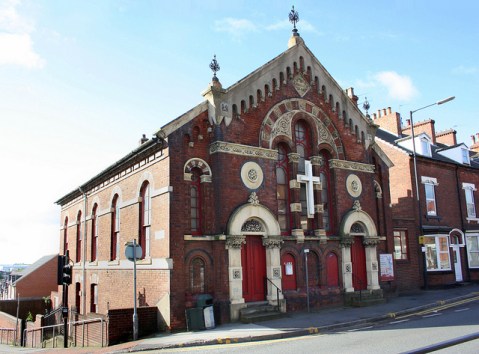
Even as public life grinds to a halt, still the cultural crimes fester. This stunning chapel from 1863 has been given prior approval for demolition pending a bat survey, which means the applicant, Mr Surjit Duhre, will be seeing off this example of Victorian splendor imminently.
It is rare that the Primitive Methodists displayed such ostentation, so this building seems to have caught them in an uncharacteristically extravagant mood.
The applicant argues that there is minor spalling on the brickwork (as there is in every brick building of this age); the only remedy for which is complete demolition. If thats the case why did you apply for conversion to flats 3 years ago?
Extremely sad to see this building go, as it offers a notion of civic life along this high street otherwise dominated by residential uses. With so many new churches springing up in inner suburbs such as this, namely by immigrant pentecostal communities, it is such a shame that these new congregations can’t make use of the already existing religious buildings. This is both a planning failure, and a market failure to marry supply and demand.
Doncaster needs to retain as much cultural heritage as possible, so I’ll be pressing for a spot listing from Heritage England. Sad to see no media coverage of this in the local press. Let’s hope that changes soon.
Nortonthorpe Lodge, Scissett
Gatehouse to be knocked down in Scissett, Huddersfield:
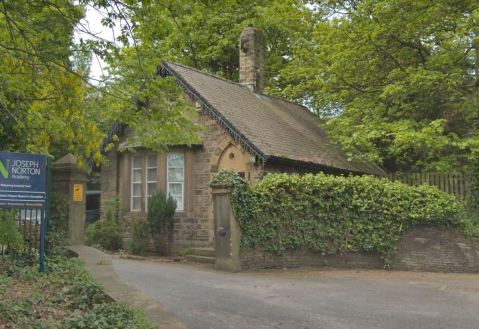
Prior notification of demolition, so no development control determination for this cute lodge.
Photos included in the application show the rear of the building to have perished, with severe structural damage that would need a large amount of investment to remedy. Unfortunately, the size of the building probably would render such a project uneconomic.
Nonetheless, four-roomed dwellings like this are a vital part of the housing stock. If/when I am in the autumn of my years and can no longer face stairs, this is the kind of place I wish to wind up.
Lodges like this make the built heritage of West Yorkshire feel like Hansel and Gretel should be leaving bread all over the place. As with Methodist Churches and Working Mens’ Clubs, they somehow are slipping through the net of policy-led planning, with no means of recourse to save them from demolition.
House in Loxley, Sheffield
Application to demolish a detached stone house in Loxley:
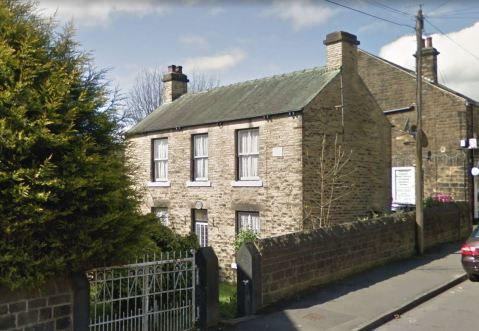
499 Loxley Road is a classic. Good Victorian housing stock, still robust, will high quality masonry makes up much of the housing in this area. There is no real reason to demolish such a building, particularly with the embodied energy required to build anew.
The gable facing the road, slightly offset and built below the road grade level brings a quirk in geometry to the street frontage, enhancing the townscape of the village. Unfortunately, the developer wishes to intensify the site by adding another 4 bedroom dwelling. Sadly, the wall will be lost, and the greenery of the curtilage much reduced.
And I always thought of Loxley as a place of robbing from the rich.
Rising Sun Inn, Darfield
A former pub near Barnsley to be knocked down:

The name of this former South Yorkshire pub was difficult to ascertain. No mention of it on historic maps of the area, I eventually came across a match on closedpubs.co.uk. Darfield History Society also have some interesting pictures and information on their Facebook page.
Perhaps the most dilapidated building I’ve written about, but still worth a mention before it returns to the ether, The Rising Sun was a fine example of staggered terraced building, navigating a steep hill and punctuating a junction. Much of Darfield was cleared in this area in the not-so-golden era of town planning, but this pub remained well patronised even until 1988, as evidenced by this interesting video.
How I wish this little row had weathered the course of time. The optimist in me says a good portion of the building is repairable, but I know only a visionary would be willing to plough money into such a project. I’m sure they are out there. If only they would read my blog.
Millfold House, Rotherham
Demolition of Millfold House in Rotherham Town Centre:
https://rotherham.planportal.co.uk/?id=RB2020/0088
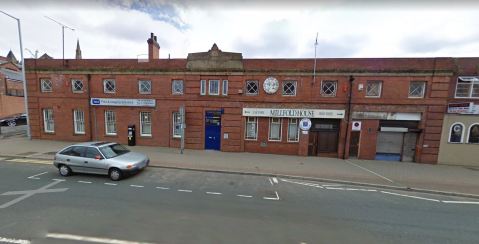
In all honesty, no one will rue the loss of this building apart from the hardcore conservationists. Of which I am one.
Built in 1936, I am fond of this building because it represents the last wave of industrial buildings that also attempted to integrate into townscape. These workshops have a better frontage that most modern commercial buildings, which is quite a feat for the town of Rotherham. The buildings demonstrate that the lost art of industrial architecture remained with us until relatively recently.
I’d like to see this building retained because it is meaningful; it encloses an important corridor into the town centre as industry transforms into civic architecture. The building shows that there is an answer to the desolate inner-city rim that plagues post-industrial urban centres.
Props to the developer who commissioned a heritage statement for the building. I’ve seen much more important buildings reduced to rubble without such consideration.
The Mayflower, Austerfield
Plans to demolish a pub near Bawtry in South Yorkshire:
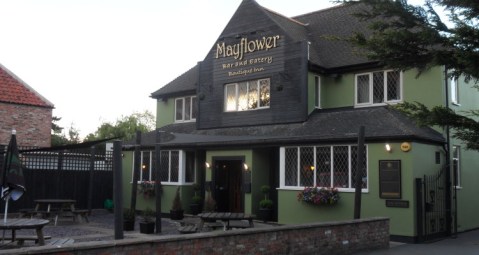
The Mayflower is the only pub on Austerfield High Street. Yet somehow nearby Bawtry supports between 6 and 7 drinkeries. The owners have sunk £300,000 into diversifying the pub and offering a full restaurant service, and the business has yet to cease operating, which suggests the new model is working. Sadly it must not be as lucrative as 12 apartments.
Thankfully the proposal has generated some column inches locally:
Let’s hope the local Parish council can demonstrate the capacity elsewhere for local housing targets, and deny this unnecessary windfall development.
The Three Horseshoes, Killinghall
Pub to be demolished near Harrogate:
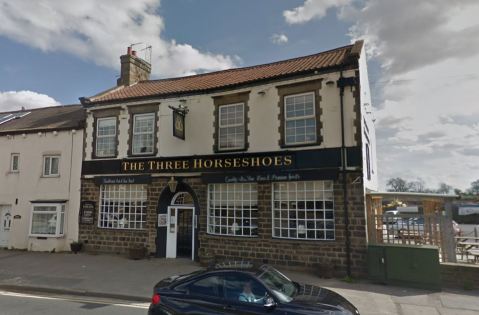
Villages with two pubs are cursed. It seems that one of them must be lost. On this occasion, The Greyhound Inn over the road won out. And again we will see a village lose a dichotomy of alehouses.
From a design perspective. the pub is a vital component of the geometry that makes up the village centre located at the junction of Otley Road and Ripon Road. The building adds vital flare to the street frontage, with bright pantiles, a jet black arched doorway, and exposed window quoins all adding to the landmark quality of this village centre building. If the developer could see the value of this, and then add another building onto the terrace, this would be an enhancement of the village form of Killghall. Undoubtedly the application should be refused on grounds of poor urban design. Please don’t ruin another English village.
Fountains Hall, Bradford
Plans to demolish what’s left of this grade II listed building:
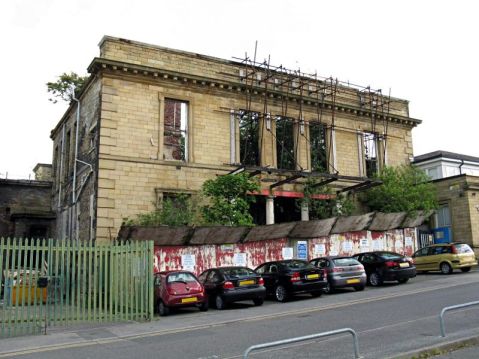
Sad to see this former Friend’s Meeting House in such a state of ruin following a fire around 25 years ago. Listed as an example of bold civic-mindedness by Victorian Quakers, the building was clearly sited to make a statement in the centre of this mercantile city.
If some miraculous civic benefactor could summon £10 million, with no illusions of a return on investment, then yes it would be fantastic to salvage this building. But of all the buildings I’ve longed to see saved, this one is undoubtedly the most unlikely.
Nonetheless, it would have been great to see the new development integrate the Victorian facade into a new scheme. Such a postmodern visual gesture would convey a deep reverence to (and investment in) the heritage, whilst segueing into a renewed identity of the city as the ’20s come around for the second (…or twentieth?) time.
Phoenix Mills, Huddersfield
Conditions discharged to allow demolition of mil building in Huddersfield:
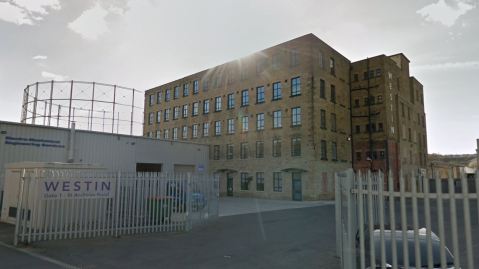
The last of the old buildings down Leeds Road in central Huddersfield, permission was granted to level this site way back in 2014, but it looks like it will finally be dropped over the next few weeks.
Although an unassuming building, the stark silhouette of the mill is vital to the townscape of the Town centre’s fridge. The utilitarian architecture of the mill a reminder of the golden age of this town’s industrial heritage.
Sad to see that more B2 corrugated tin shacks will take its place, which offers a much lower intensity of land usage, and provides inflexible space. Victorian mills can be used in so many more interesting ways, and when utilised properly create hubs of diverse commercial and industrial uses; not jus artists’ workshops and vegan cafes.
 The Demolition Register