Substation and Switchgear, Huddersfield
Most people will find this building diminutive, but every time I drive past it, it captures my imagination, simply wondering why an electric substation and switchgear house would be build to resemble a chapel. A testament to the care that was offered to everything that would happen to be created.
http://www2.kirklees.gov.uk/business/planning/application_search/detail.aspx?id=2014%2f93973
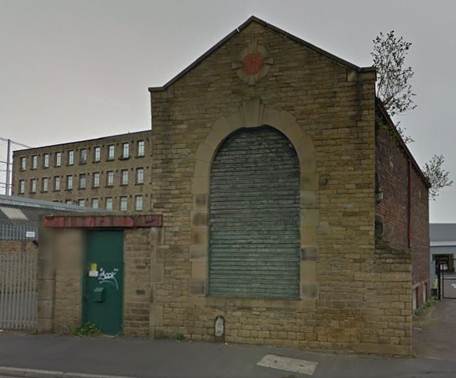
Not much remains of the industrial infrastructure that would line the network of streets coming off Leeds Road in Huddersfield, and I will be sad to see this last allusion to the civic pride of West Yorkshire’s industrialists.
Unremarkable, but vital buildings
A small building in the industrial belt of Bradford has a demolition application set to it.
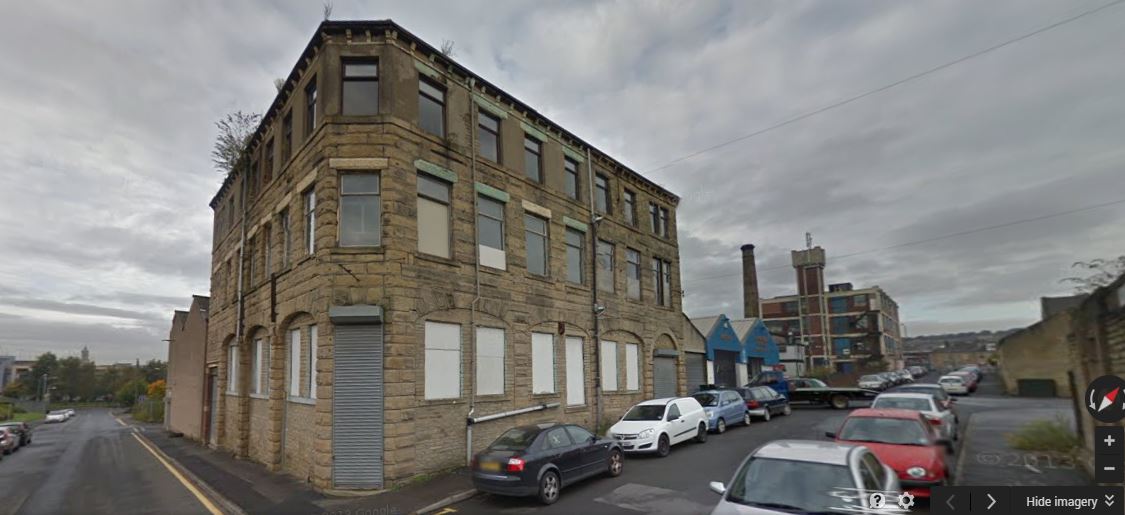
Individually buildings like this demonstrate no aesthetic grandeur, but should this block in Bradford be regenerated, the industrial building stock would be a lynch pin connected to former to the future. Understated buildings like this have no statutory protection – there is nothing planners can do to stop them being demolished – but when they are integrated into a new development tend to anchor the new builds to the setting.
Old buildings are a finite resource, and a building like this, although presently considered of no value, would one day be priceless.
Burnt out mill building
A fire damaged portion of a mill complex is to be demolished following recommendation from a structural engineer.
This has occurred a number of times in West Yorkshire – the new Aldi site in Slaithwaite, and Ebor MIlls in Keighley come to mind – and its a bit of a trump card in clearing a brownfield site. Understandably if the building is a hazard it has to be mitigated, but im often sceptical as to weather the stone work is truly compromised by fire damage.
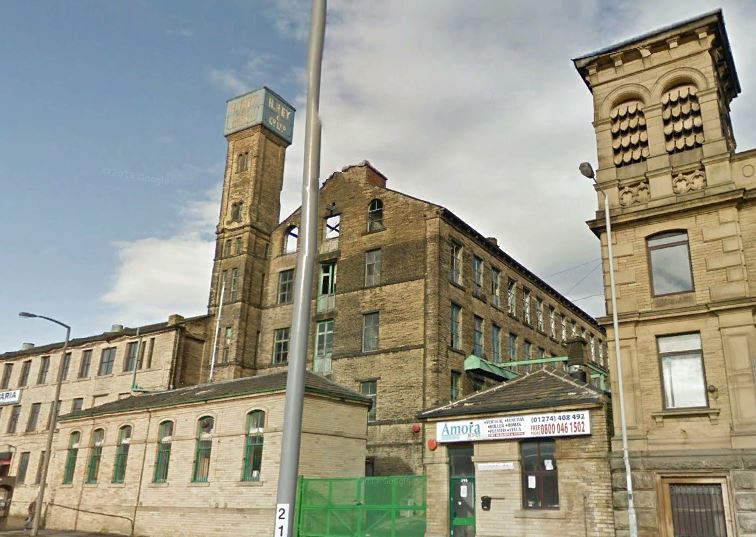
The taller building and tower in the image above are set to be demolished.
We are going to lose another spectacular mill to these terms. 3 or 4 a year and Yorkshire will have lost them all. They are esoteric, quirky and old, but they are so important to our history. As the Colosseum in Rome was plundered for stone, we also do not yet see the value of these monuments to our pre-eminent age of prosperity.
2 entire industrial blocks in Sheffield
This is some real land clearance in Sheffield. A conservation area based upon its virtue as a historic industrial area is to be cleared;
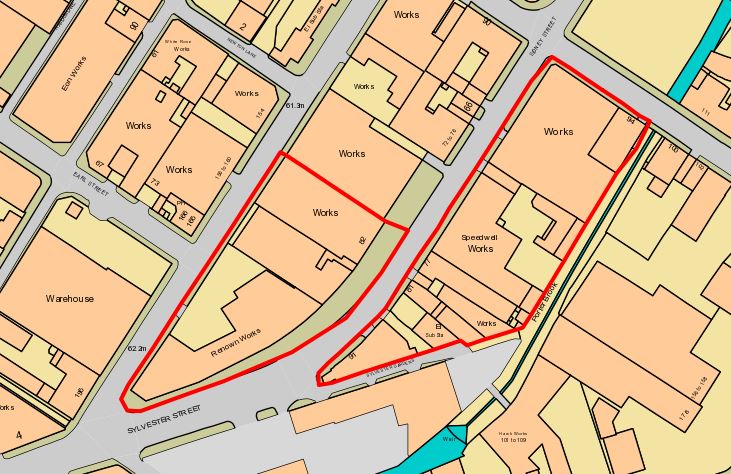
Now Im in no way suggesting the entire block should be retained – much of the build here is shoddy – but the block has been developed in such a piecemeal way that a lot of variation exists within the street frontage. See Jane Jacobs for why this is imprtant in urban design.
City centre developments now demand huge amounts of space, with complete clearance. What makes industrial cities beautiful are the remnants of the past can can be found tucked between glistening skyscrapers.
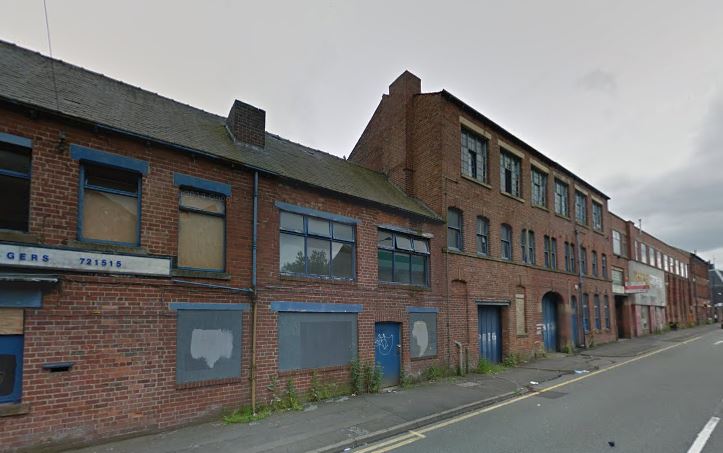
Once the land assembly people have this entire block under one deed, we will lose the variation along the street that is a result of parcelled ownership. Shame.
Instead, it would be nice to see some of the 3 and 4 story building retained, and newer developments incorporating them into a masterplan. But alas, the construction industry is devastatingly risk averse.
Last fragments of the canalside in Mirfield
I was saddened to see the last industrial building on Station Road in Mirfield put up for demolition, as this street faces the canal, and is cobbled – it truly is one of the last authentically Victorian environments left in the town.
http://www2.kirklees.gov.uk/business/planning/application_search/detail.aspx?id=2014/92001
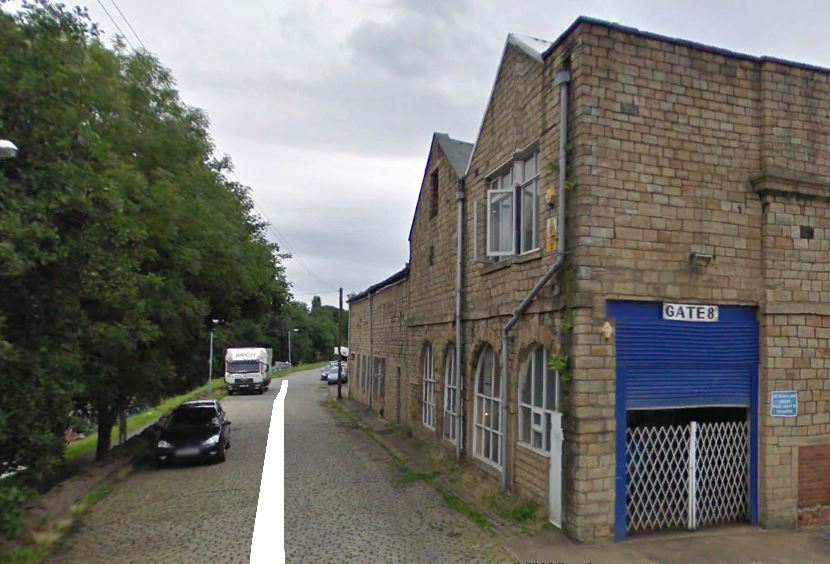
It is quite clear to me that any residential or even commerical redevelopment of this site would benefit immensely from retaining this frontage. Finding tenants has become about branding and the creation of a location. Victorian stock adjacent to canals (and cobbles to boot), flies off the real estate shelves. Don’t demolish this last vestige of industrial Mirfield, its bloody beautiful.
Industrial Street frontage, Bradford
A large site in Bradford is to be flattened for purposes of progress by Lubna Foods. The buildings are not remarkable, but they do constitute a very appealing street frontage;
Planning application for Garnett Street, Bradford.
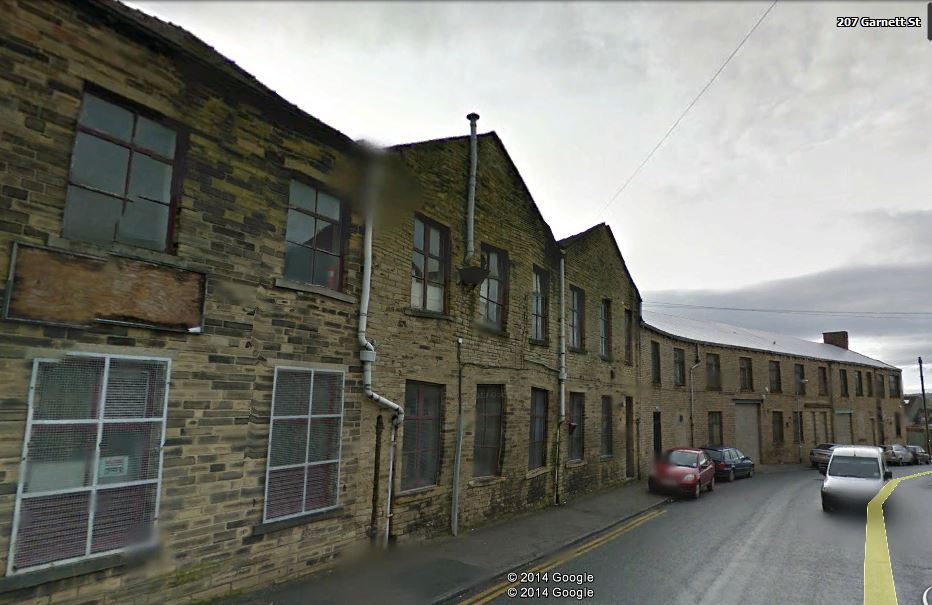
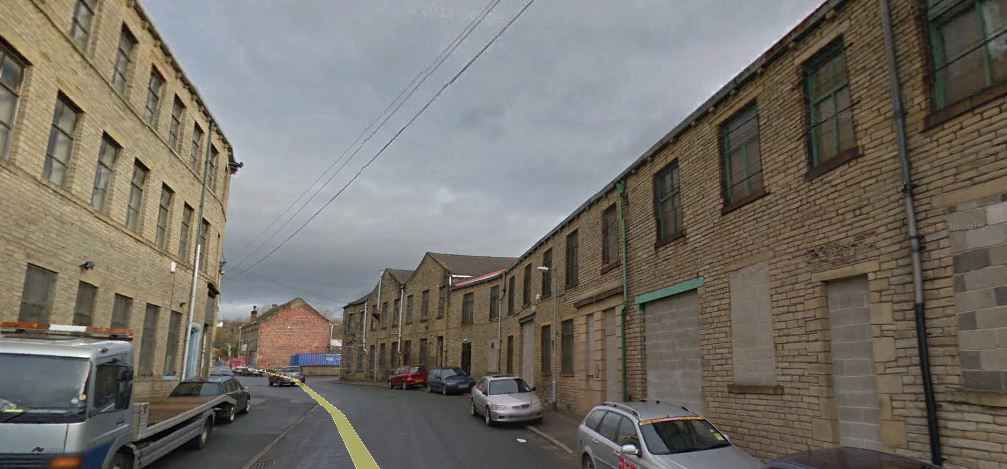
It is these streets, just away from city centres that have traditionally been the preserve of creative start-ups, offering commercial space for nascent industries, and that is how the regeneration of a city through the creative class happens. The problem is, if you allow these post industrial areas to be demolished before they come to life, before they are discovered by intrepid urbanites, then your population loses its creative class, and you don’t have a city anymore.
Also to be lost is a chimney that would make Fred Dibnah weep;
Ambitious restoration of a complex industrial site
For every developer who clings to the argument that financially viable development requires a flattened site, covered in detached dwellings and double garages, uniform in design, to be built from the cheapest possible materials – i give you this scheme which was submitted to Leeds council this week:
Redevelopment of Sunny Bank Mills
The owners of this now defunct industrial complex could very easily hand their land over to an asset management company, who would offer it to a developer, raising it to the ground, as we see each week in the UK.
Instead, they have been upstanding in their sympathy for history and place, and have clearly put a lot of time and effort into developing a mixed use scheme that retains most of the original historic fabric of the complex, and most importantly, is quite clearly going to offer a hefty margin on their efforts.
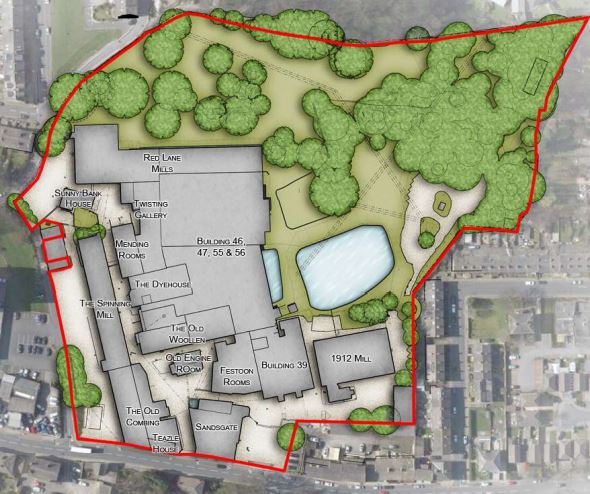
I can not commend the actions of the landowner enough, in taking a risk, being innovative, and thinking beyond his bank balance. If anyone needs a case study to demonstrate that demolition of a seemingly esoteric building is avoidable, this is it.
Lets hope this sets a precedent in the industrial North.
Demolish Halifax textile mill for 22 houses
36 Textile mills remain in Halifax of the hundreds that would once punctuate this industrial landscape.
Spring Hall Mills is one of the remaining mills and has been derelict for some time, but the building and particularly the domineering Mill Street main edifice is robust and could very easily be converted into flats.
Application for full demolition can be found here.
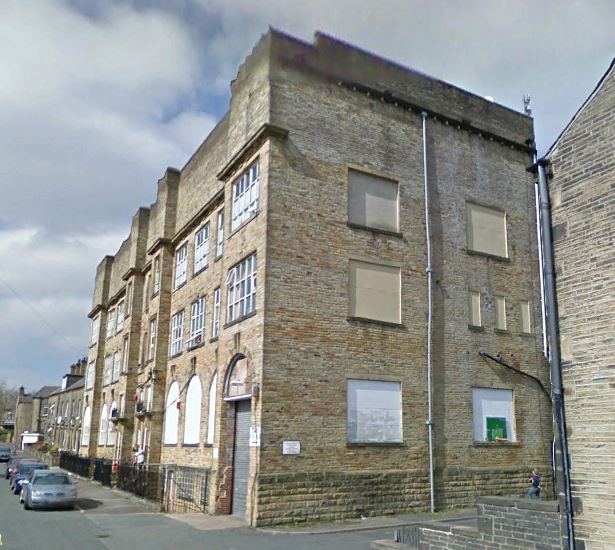
I fully understand the developer wanting to use the workshop space to the rear as a brownfield site, but it would be quite easy (and lucrative) to use the main building to supplement the 22 houses will a number of flats. This takes care of tenure mix, affordability quotas, and heritage contributions.
The footprint of the front building could be saved at the expense of two detached houses.
Although architecturally unremarkable, the mill is vital to this fantastic example of stone built landscape of terraced streets converging on the economic lifeblood that is the mill. This streetscape is West Yorkshire embodied.
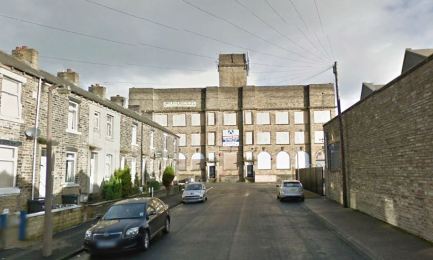
Developer North Point Living, please keep it in tact (and increase your returns in the process)
 The Demolition Register