Unforgivable demolition of theatre in Hoyland
Speechless……
Wish I had come across this before the permission was curtly passed.
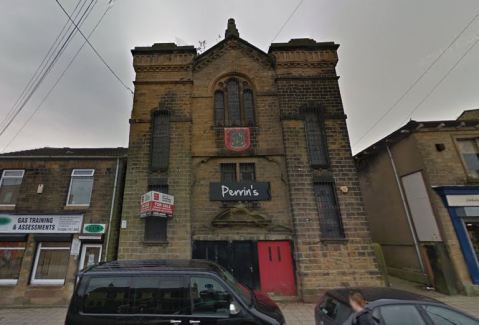
Hoyland is a small town in South Yorkshire, with a decimated centre that was formally a microcosm of Victorian creativity and urban thinking. This building is without a doubt the most impressive example of the era that remains in the centre (please explore street view to see what is left of the centre of the town). First used as a playhouse, then as a cinema, the building has remained redundant for a while, and after having been snapped up by Commercial Development Projects Ltd is now to be flatted to be replaced by:
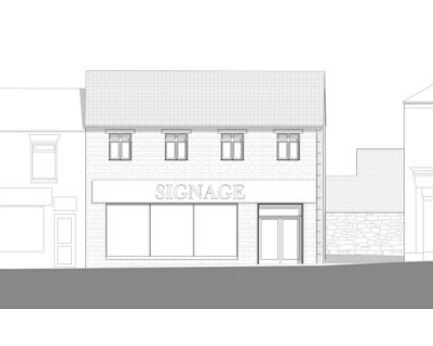
I just can not understand firstly how the consultant architect can write a design and access that condemns the building to demolition (oh yeah thats right, money), and secondly, how the planning officer can not at least get this to a committee.
To lose this last vestige of Victorian splendour in Hoyland would be a cultural crime, and I’ll be setting about doing everything I can to stop it being even scraped by a bulldozer.
(Hopefully) more to follow…
Former high street in Huddersfield
Plans to demolish the last remnants of the Victorian High Street in Mold Green, Huddersfield:
http://www.kirklees.gov.uk/business/planning/application_search/detail.aspx?id=2015%2f93781
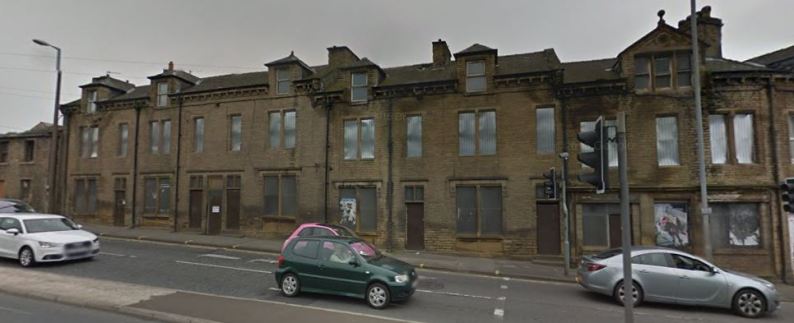

So many times I have driven past this row of buildings, concerned by the portent of boarded up windows and council issued safety signs. There was a time when this part of Huddersfield was Victorian, and the streets were defined by the buildings that fronted them. Then slowly they were demolished to be replaced by car park walls, shrubbed verges, and budget supermarkets. In no time at all the place became formless. This row is the last vestige of traditional urban culture on the road, and its presence helps us to remember how this area once thrived with pedestrians, before it became an arterial road. Sadly the buildings are council owned, and so planning permission is but a formality. Should anyone from Kirklees read this, please reconsider – the housing crisis, the environmental crisis, and the need for identity in northern towns, belies all reasons for demolition. Think on.
Pub in Baildon to make way for flats
Application to needlessly demolish The Little Blue Orange public house to make way for a plot for 6 houses and 9 apartments:
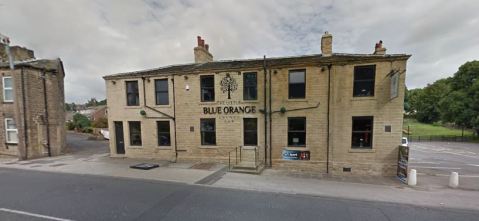
Surely it can be justified that a pub/restaurant in this location is sustainable?
A perfectly robust building that could be used in a number of commercial incarnations, or at worst, converted to very attractive housing, is to be flattened. Pubs have huge car parks, which make such premises easy options to bolster profits when under the cross-hairs of the annual asset audit at a major brewer.
It is a major flaw in the development industry, and is the fault of the planning consultant that hastily fails to consider whether extant buildings are viable for retention. The private consultant works with red line plans only, seeing only hectares and minimum dwelling densities.
Cross Church Street, Huddersfield
Application to extend the Kingsgate centre involving the demolition of part of the historic street front of Cross Church Street:
http://www.kirklees.gov.uk/business/planning/application_search/detail.aspx?id=2015%2f93584
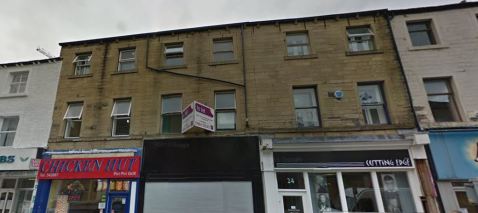
Although not an ornate building, this is an example of a wider context that will be diminished by a development. This street is an in tact albeit rough Victorian Street, with yards tailing off every now and then. Somehow the entire street has survived bombings, redevelopment, and depressions, and it would be a shame for the extension of the Kingsgate Centre to truncate this survival. Strangely enough, the buildings would make way for a cinema. Town centre cinemas were a thing of the past I was told. Lets hoe this indicates something of an urban renaissance.
And while I’m at it, I wish the developer would think more about the frontage they are proposing for Venn Street. This development could actually forge a new quarter in Huddersfield with just a bit of architectural innovation applied.
Oakbank School, Keighley
Another old school building to be demolished in Ingrow, Keighley:
The school itself was constructed in 1963, however in the core of this asbestos/plywood complex is an impressive Manor House known as Haggas Hall.
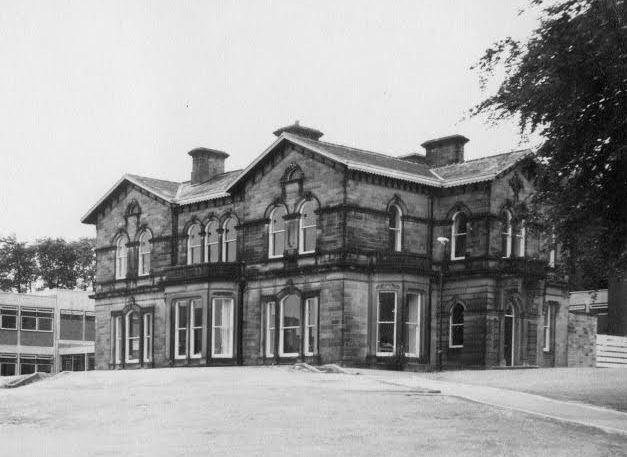
This image taken in 1963 (thanks to David Kirkley of Keighley Schools Heritage) shows the building in all its manorial glory. Sadly not spectacular enough for Bradford Council to consider intervention, this is yet another historic building to be lost during the current wave of school rebuilding.
Of course it is fantastic that funding is going into building new education facilities for our young people, but there does seem to be a culture of scorched earth redevelopment, rather than the existing sites being analysed as the composites of buildings they are.
Its somewhat lazy, and the new school will lose some capital derived from having a historic ‘core’ building as a centre piece. By all means get rid of the prefabricated periphery, but retain the sturdy stone nucleus.
Hilltop Works, Chapeltown, Leeds
Another grand old Mill building near Leeds is to be razed for housing:
Here is an aerial view of the existing site. I can not find any close up images of the buildings sadly.
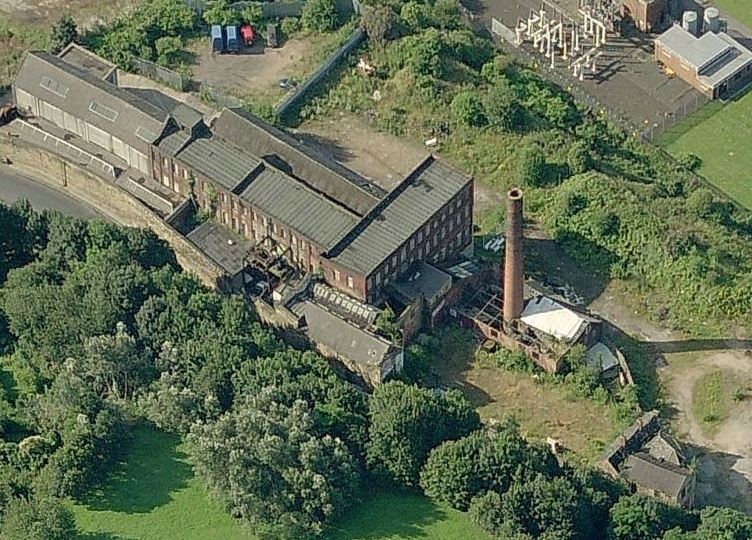
Not the most inspiring Victorian building, but impressive nonetheless. As ever it is a shame the developer can’t see the value in conversion to domestic rather than erecting a suburban utopia. A lot of the site would need to be thinned out granted, but if the main edifice of the mill building could be retained, then another fragment of our unique industrial landscape would remain in place.
I am also quite sure that this building is situated in a conversation area – specifically a conservation area predicated on industrial heritage.As ever such designations are entirely meaningless when pit against the planning concepts of brown field land and five year housing supplies.
Manor House Nursing And Residential Home, Lightcliffe
Demolition of a nursing home to make way for 14 dwellings in Lightcliffe West Yorkshire:

Difficult to date this building, but it certainly has historic qualities that would be sad to lose. Architecture aside, surely it must be the wrong direction to be losing care home stock as our population ages? Why not some enabling development in the grounds to keep the place going?
Mediocre urban design rears its ugly head once again:

Has the architect even visited the site? Why waste time and money doing something like that?
Edwardian house in Dewsbury
An attractive town house in Dewsbury with marvellous high chimneys is to be demolished to make way for an extension to a religious building.
http://www.kirklees.gov.uk/business/planning/application_search/detail.aspx?id=2015%2f92174
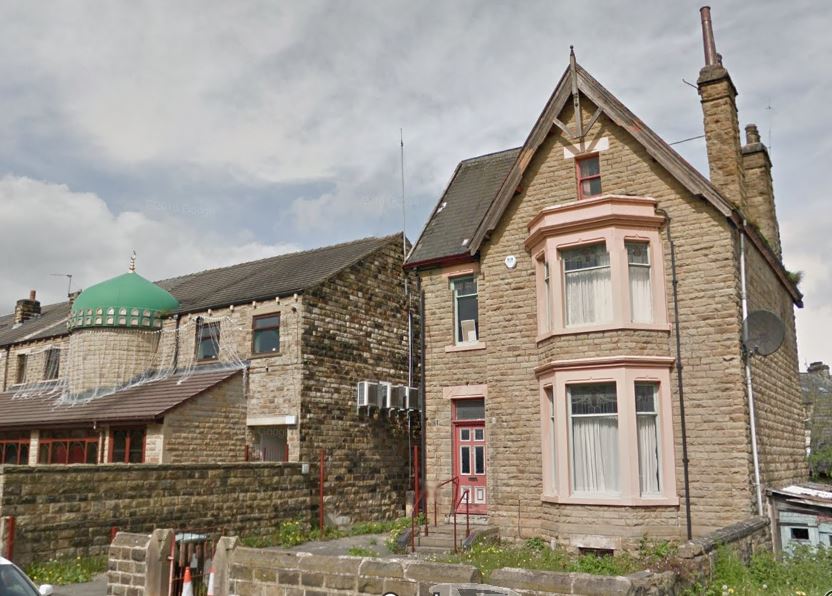
This is an interesting case, as the loss of the building in question would be to allow for the extension of a religious building. I respect that the council needs to offer provisions for the building of places of worship – West Yorkshire’s Muslim community has become part of the quintessential character of the region. As such I suppose this location is as good as the next, but it remains that this is the loss of an attractive old building the likes of which can no longer be built.
I would challenge the developer to see if such an old building could be modified into a mosque, or perhaps even look to some of our redundant industrial buildings or the methodist churches and schools that we are in the process of losing. That would be an interesting integration of cultures, and be a unique addition to the industrial landscape of the region.
Broomgrove Club, Sheffield
Application to demolish Broomgrove club in Sheffield, for the erection of a couple of houses:
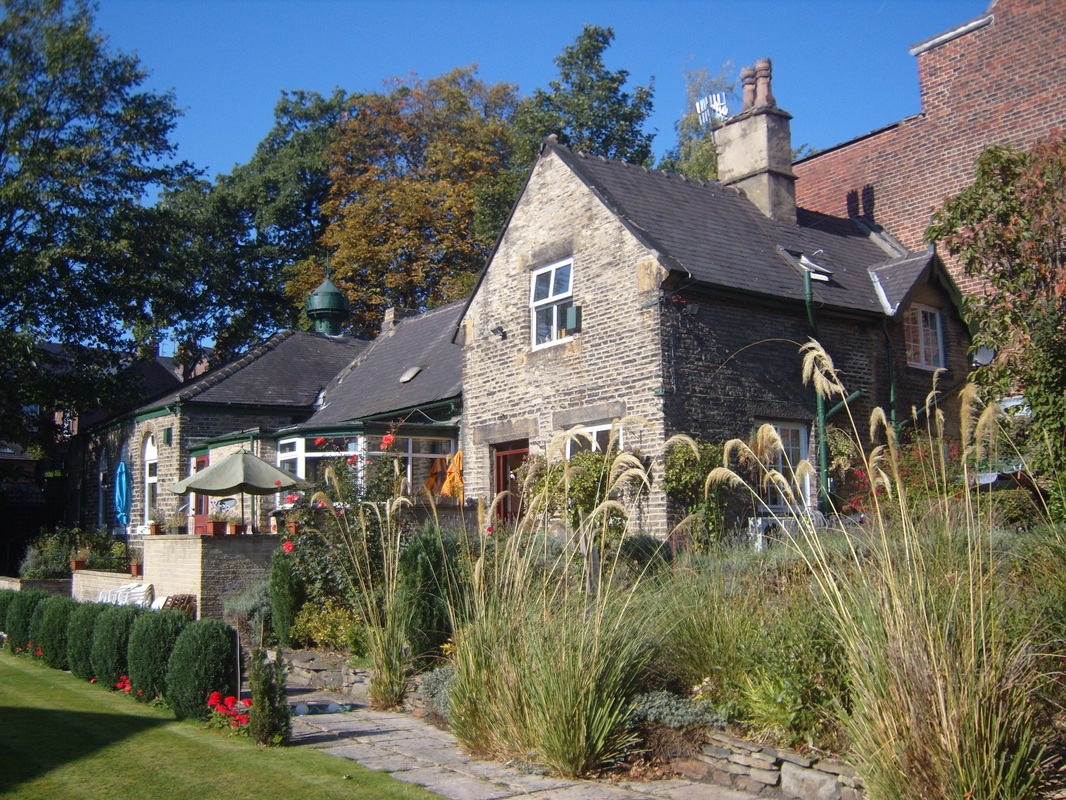
I don’t know much about this building, but it certainly had some utility for the local community which will sadly be lost. Whats more, the net gain from this development is only one dwelling. And realistically a second dwelling could be added to the existing curtilage. This is further loss of the civic architecture the Victorians left us, not due to redundancy of the building, but because their legacy – prestige and primacy of social institutions, and participation in society – has been eroded. This is a serious concern for our culture.
Duke of York pub Sheffield
Another corner site pub in Sheffield is being demolished as part of a wider site clearance on behalf of Lidl, purveyors of continental shrink-wrapped groceries.
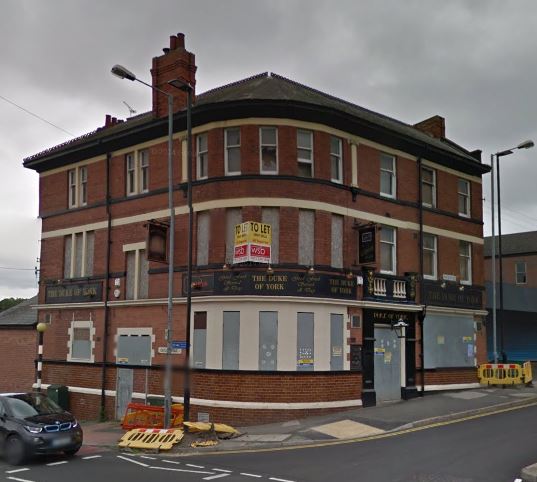
Lidl already have a supermarket on this block, so this demolition is to make way for a cap park extension. Specifically, the plans show the footprint of the pub being replaced by a trolley storage unit.
Just another reminder that after all the rhetoric from local governments about pursuing sustainable development, we are losing a community asset to facilitate further the culture of driving to a supermarket to fill your car with groceries. Of course, anything can be described as sustainable thanks to the caveat that economic growth or job creation is an important ‘pillar’ pf sustainability. I’m of the opinion, that if development doesn’t meet all the criteria for sustainability, then it is not sustainable, with no exceptions. Come on Sheffield, don’t let them extend their car park to further this urban void!

