Wagon and Horses Inn, Leeds Road, Huddersfield
Formally Ricky’s Bar, formally Wagon and Horses Inn, to be demolished to make way for a car showroom forecourt:

So sad to see this pub go, which I believe was snapped up at auction following the bankruptcy of the eponymous Ricky. Particularly tragic is the loss would be to create a car sales forecourt, of which there are already so many on Leeds Road, making this corridor more so an exposed and dull place.
This would represent further erosion of the street front of Leeds Road which has slowly disappeared over the last century to be replaced by miscellaneous uses found on the fringes of towns that require cheap and ease of vehicular access.
In spite of there now being a premier league football team playing home games a stones throw away, I imagine arguments about viability would still militate against the retention of this building. I hope Kirklees can somehow block this application, but I somehow doubt it.
We demolish public houses next to football stadiums. That is the modern state of land use planning.
Crown Street Car Park, Leeds
Application to demolish a number of Victorian Buildings along a back lane in Leeds City Centre:
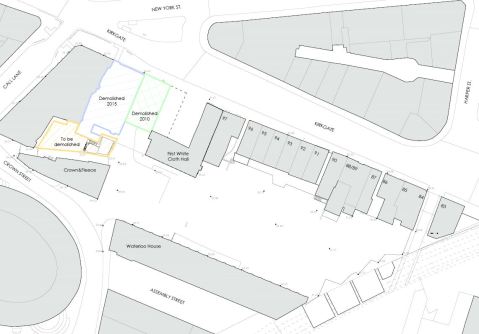 What concerns me about this application is not the loss of the buildings – albeit reprehensible to destroy the Victorian urban grain – rather it is the opportunity cost of developing this site and not creating much needed city centre green space that dismays me.
This could have been a beautiful setting for some breathing space in Leeds, with the backdrop of a railway viaduct, the disordered roofscape of Kirkgate, and the Corn Exchange.
The Victorians would have ensured this space was civic. How they did that seems to be a lost art.
Clocktower, Lockwood, Huddersfield
Application to demolish the clocktower at the former Mount Pleasant School:

The school was redeveloped following the demolition of the Victorian school building (the powers that be unable to differentiate between shoddy facilities and dilapidated interior, and an important robust vernacular building).
Yet Kirklees have slyly slipped this application in a few days before Christmas. No one will notice that right? Yes, absolutely we will notice.
The tower was initially thought to be saved after a hard fought campaign. However the building was rejected from listing status due to the incomplete nature of the site, however historic England recommended a local listing. I doubt such a mechanism actually exists in Lockwood.
Airey housing estate in Rothwell
Post War Pre-fabricated ‘Airey’ housing estate to be replaced:
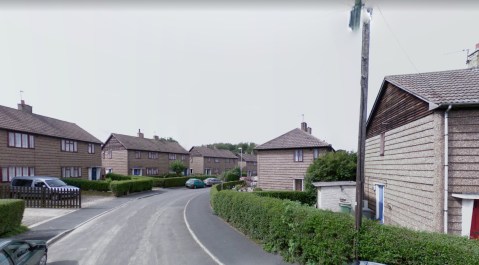
A concrete column parallel universe – how odd to see what appears to be the ubiquitous hipped roof council estate semi, transposed into pebble dashed concrete.
Some would argue that these buildings have been left standing for too long. Indeed they were only meant to serve their purpose for a decade or two, but alas these buildings have endured, and in a corner of rural South Leeds a relic to post-war utilitarian house building can be seen. Much like Anderson shelters or Bletchley Park, I find this place to be a monument to the generation that gave up so much to get through the second world war.
Presumably if they could survive another 50 years, then heritage status would be bestowed upon these houses, but for now they are still seen as an eyesore and no doubt a health and safety liability.
Walk Mills, Keighley
Mid 18th century mill to be demolished in Keighley:

(forgive the quality of the image. There doesn’t seem to be any images of this building outside of Google Street View. Lets hope it is properly recorded before being smashed up)
Whilst reading the heritage statement (which always seem to have been complied by a wrecking ball salesmen), I noticed the reference to a pre-application meeting. Frankly, if a planning application comes forward following pre-application negotiations, then a decision has already been made, and the democratic right to publicly comment is devoid of meaning.
When a developer has sat around a table with council officers, having paid a grand for the privilege, they expect to get an expeditious planning approval.
So the fate of this remarkable building is already sealed. I will comment, and urge others to do so as well, however, the machinations within local government that will lead to the demise of this mill have been concluded.
I recommend reading the heritage assessment, as it is fascinating to see how ‘heritage experts’ justify the loss of an assets like this with exceptionally tenuous arguments.
NB – also a big loss to the setting of the Keighley and Worth Valley Railway, which runs alongside this mill complex.
Less another pub in Leeds
Former Old Roundabout in Stanningly, Leeds:
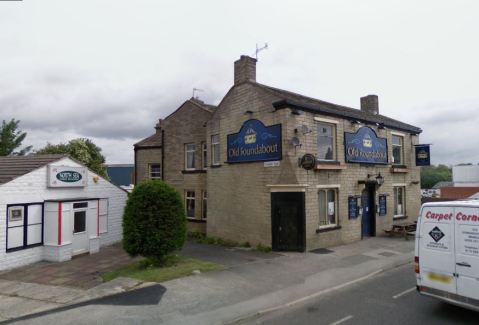
Its always a shame to see a pub demolished in proximity of another pub, because two pubs together creates a drinking destination. A critical mass just enough to draw people in from far afield to experience the drinking culture of this particular domain. I suppose this now fridge area of Stanningly is not quite attractive enough to maintain such a buzz.
Very attractive and robust double pitched building that could stay, and be repurposed in any number of ways. Lets get some local listings of non-designated heritage assets formulated asap to avoid the loss of such humble but necessary buildings in towns like Stanningly.
Albion House, Bradford
Albion House in Apperly Bridge, Bradford to be demolished and replaced with 8 dwellings:
A Victorian villa that represents an important part of this formerly rural cluster of buildings, its loss will be damaging to the historic narrative of this area, which is still redolent of Victorian culture.
The terraces, cottages, farm building and villas juxtaposed in this way tell us a story about pre-globalised life in rural Bradford.
And surely the onus isn’t on the reasoning for keeping the building up, but for knocking it down? If it is robust and fit for purpose, it makes no sense ecologically to destroy buildings.
The Flouch Inn, Stocksbridge
The sad demise of the Flouch Inn –

Demolition of this pub has been on the cards for a while now. Oout in the Wilderness of the Pennines, the Flouch is called so because its former name of The Plough became weathered and Plough Became Flouch with the loss of a serif or two.
The demolition will make way for houses; an entirely unsustainable location, and the canabalisation of what could be a great pub as part of the chain of cyclist stops found in this area.
Also being demolished is
Silkstone Working Men’s Club –
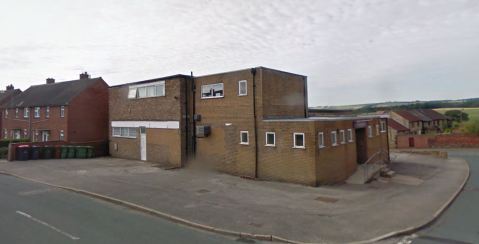
Not so pretty…but still a meaningful building
Union Mills, Eccleshill, Bradford
Robust stone industrial mills and pond to make way for a Lidl:
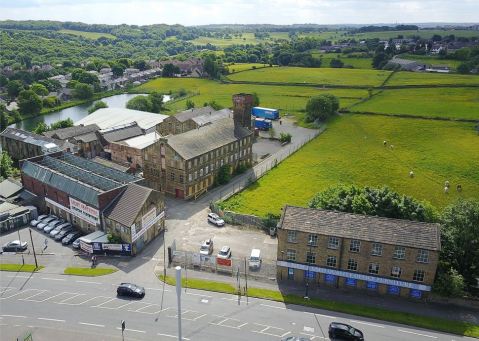
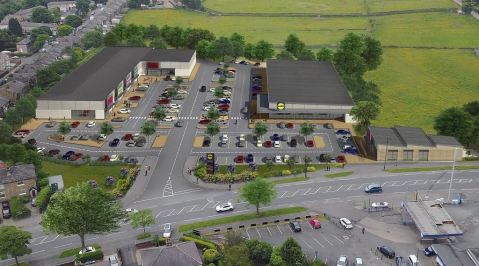
A large amount of Victorian industrial building stock is to be lost for the expansion of Lidl’s empire.
A thesis could be written about the insidious colonisation of deprived areas by Lidl. Bad for health, the economy, culture, and the environment. Not wanting to digressing into sociological territory, I will try to summarise why this is a crime against conservation.
The mills of Bradford are being lost at an alarming rate, with the local authority not seeing the value (and being powerless) in retaining humble buildings such as Union Mills. What these buildings add to the local landscape is invaluable; punctuating the rolling countryside with implications of former industrial prowess. We diminish the essence of a place when we remove its history.
Particularly objectionable is the infill of the mill pond. Blue infrastructure is normally celebrated and protected. Not only for its value in biodiversity, but for the public who enjoy it as a destination for walking and angling.
The existing buildings function perfectly well. They are adaptable, and can be used for a variety of industries looking for different sizes of space. They provide economic opportunities that are vital for small businesses in the area.
The buildings that will replace them do not have these qualities. Lidl could very easily retrofit the existing complex for their purposes, but their rudimentary economic models can not integrate such innovative strategies into their expansionist masterplan. Cleared sites only please. And no architects. Shame on you Lidl.
Highland Pub, Central Leeds
Application to demolish the Highland Pub, just off Burley Street, Leeds
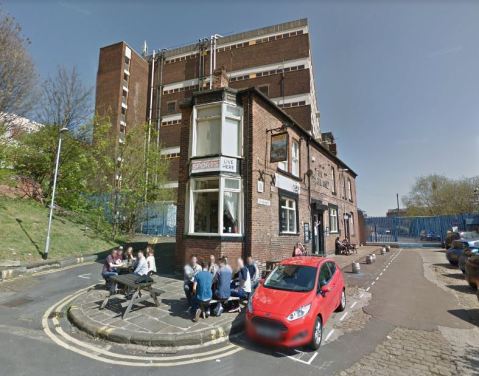
Its been a few months since there has been any imminent threat to a historically important building in West Yorkshire, but a sad return to business as usual comes in the form of the proposed demolition of The Highland, to be replaced by 14 flats.
The pub is still thriving and has by various accounts undergone something of a renaissance lately.
A curious building that has survived the comprehensive demolition of this area to find itself bravely ensconced as a wedge between the high rises and the concrete monoliths of central Leeds. Stone setts still surround the building making this oasis look like a fissure in space-time.
Such a narrow plot shouldn’t be viable for development – only suitable for a Victorian pub, yet somehow it has caught the attention of a speculator. Couldn’t you develop the surface car park 5m to the right?
This highlights yet again a flaw in the planning system; no conservation area or listing status means that the council’s hands are tied. The only reprieve would be to deny permission on other grounds relating to design and hope the owner backs down and keeps the pub serving. Apparently its great in there. Check it out before it is no more.

